 Polski
 English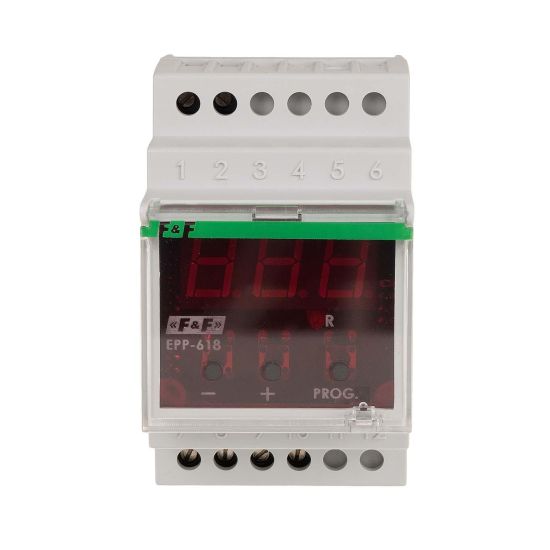
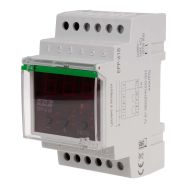
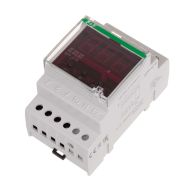
Suitable for use with:
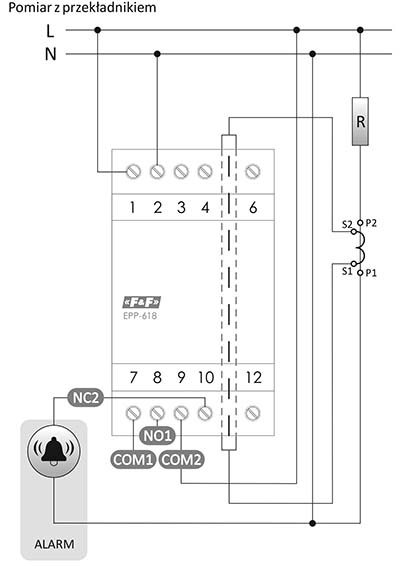
With a current transformer having a secondary current of 5 A.
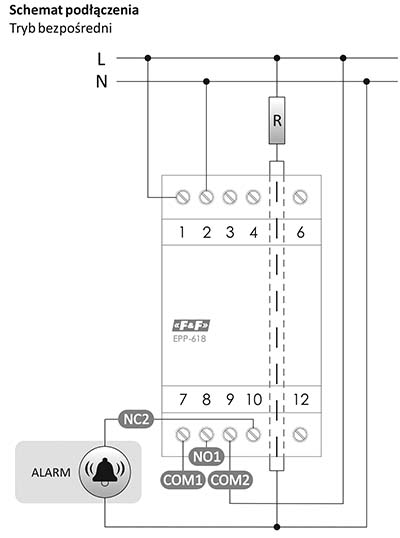
Without a current transformer, its maximum current is 50 A.
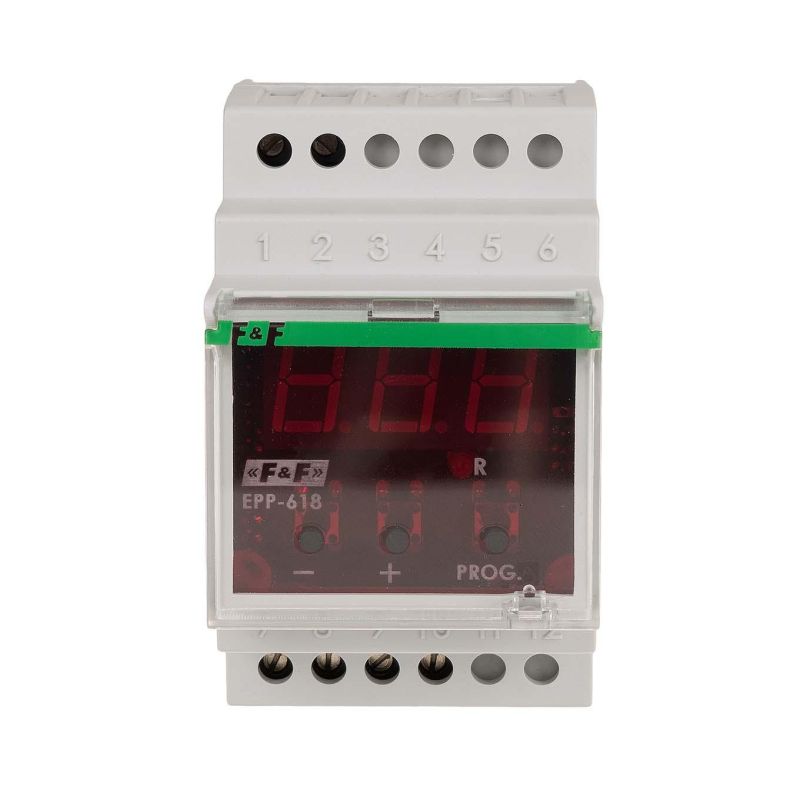
The digital display allows the current value in the circuit under test to be read in real time. It facilitates the precise programming of the parameters according to which it will operate.
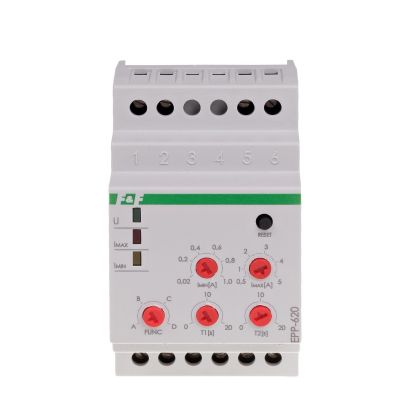
The relay is designed to operate with a current transformer having a secondary current of 5 A. It can also operate without a current transformer. In this case, its maximum current is 50 A. The relay operates in one of four modes: F1, F2, F3 and F4.
Function F1
If the current in the measurement circuit exceeds the set value Hi, relay contacts 7–8 will close. Contacts 9–10, on the other hand, will open. If the current in the measuring circuit is less than the set value minus the hysteresis value, the relaycontacts will return to their original position. The relay’s engagement and disengagement times can be further adjusted within the range of 0.5–10 s.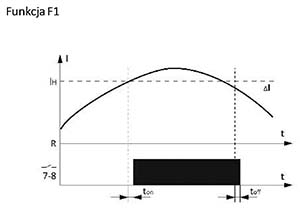
Function F2
When the current drops below the set value Lo, relay contacts 7–8 will close. Contacts 9–10 , on the other hand, will open. If the current in the measuring circuit exceeds the set value plus the hysteresis value, the relaycontacts will return to their original position. The relay’s engagement and disengagement times can be further adjusted within the range of 0.5–10 s.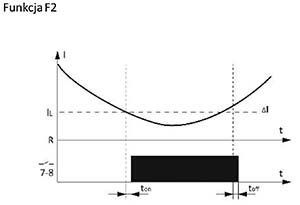
Function F3
If the current in the measurement circuit exceeds the set value Hi, relay contacts 7–8 will be closed and contacts 9–10 will be opened. In this function, the relay contacts will only return to their original position once the current value falls below the Lo value. In this function, the current setpoints are not adjusted by the hysteresis value. The relay’s engagement and disengagement times can be further adjusted within the range of 0.5–10 s.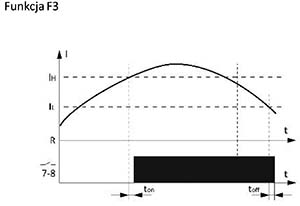
Function F4
In this function, the relay operates within the so-called measurement window. The relay will be energised if the current in the measuring circuit exceeds the setpoint Hi. The relay contacts will return to their original position if the current falls below the setpoint minus the hysteresis value. The relay will also be energised if the current falls below the setpoint Lo. In this case, the relay will de-energise if the current in the measuring circuit rises above the setpoint Lo plus the hysteresis value.
The switch-on and switch-off times can be further adjusted using the tON or tOFF time settings.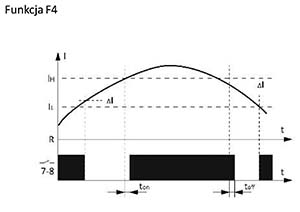

Suitable for use with:
With a current transformer having a secondary current of 5 A.
Without a current transformer, its maximum current is 50 A.