 Polski
 English
- NEW
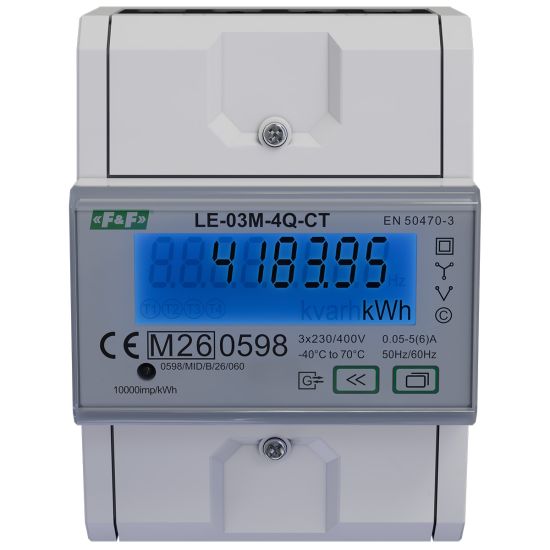
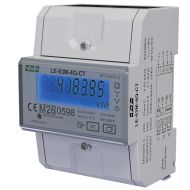
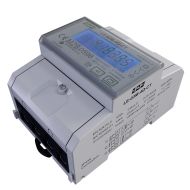
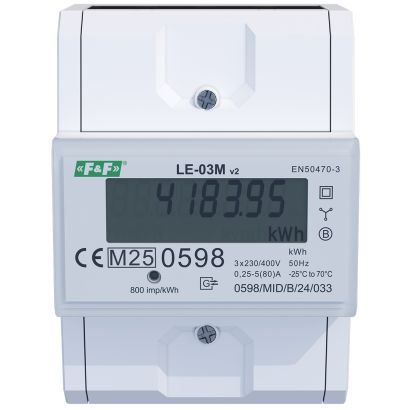
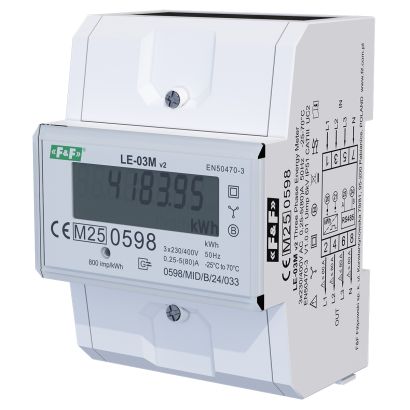
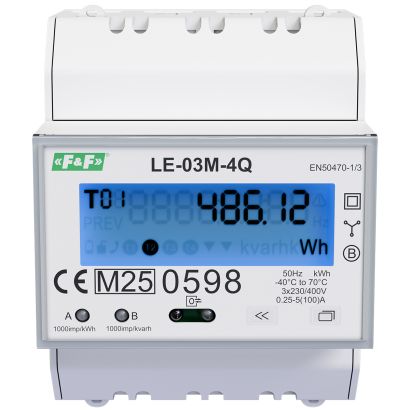
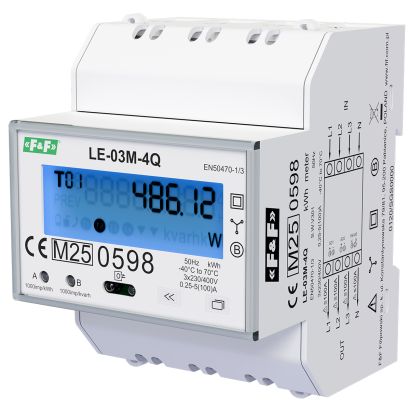
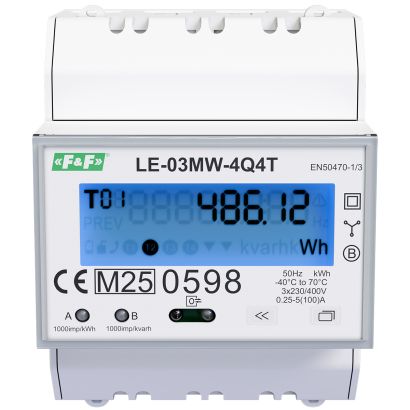
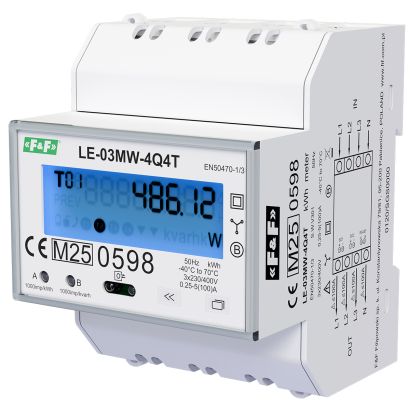
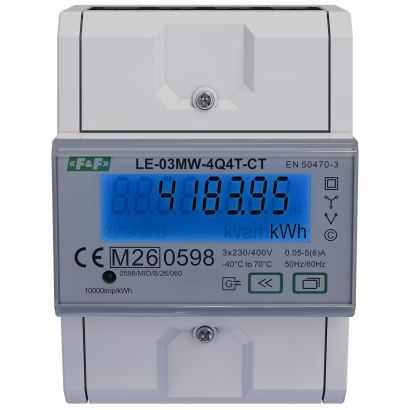
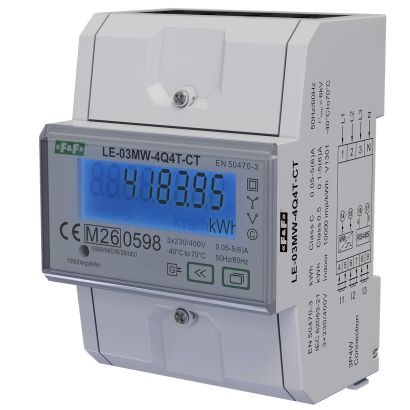
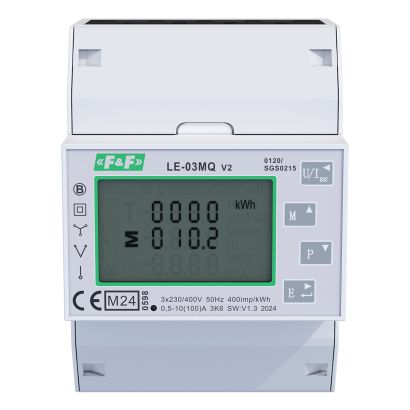
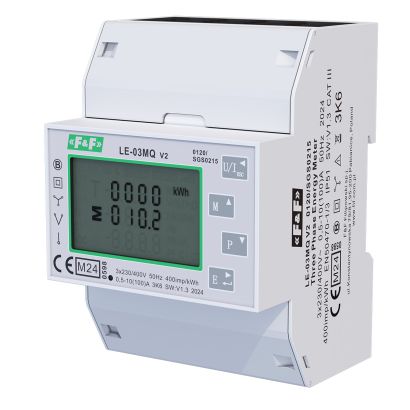
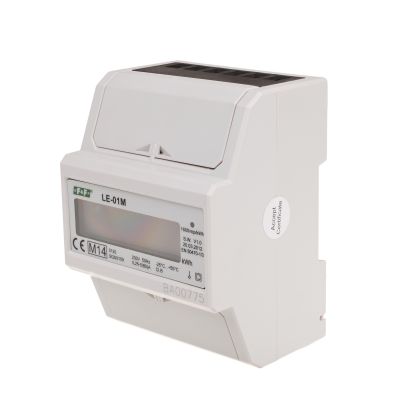
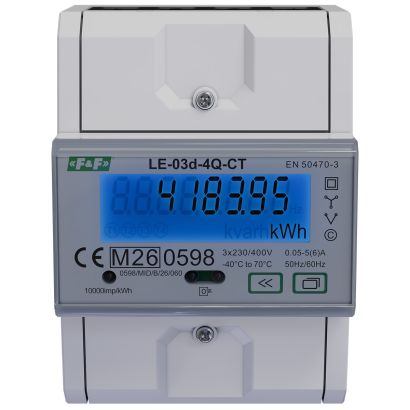
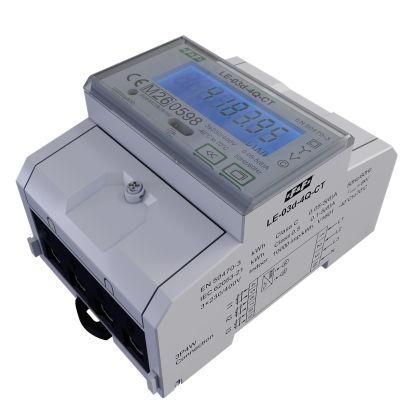
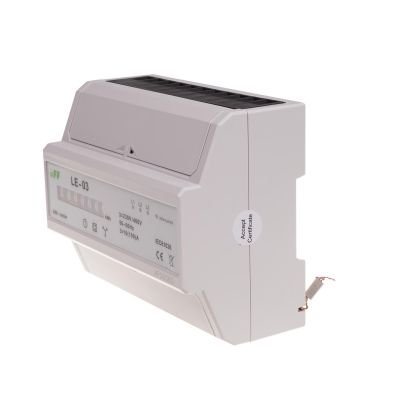
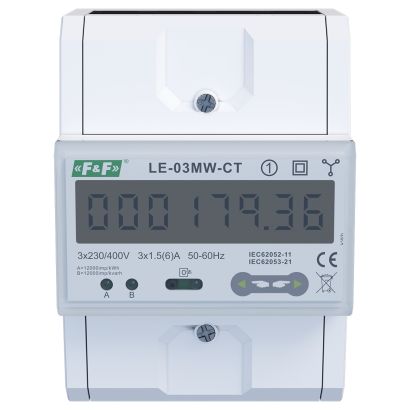
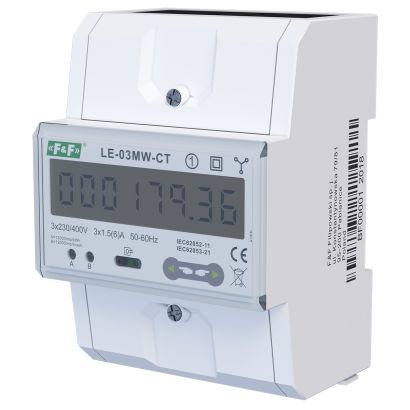
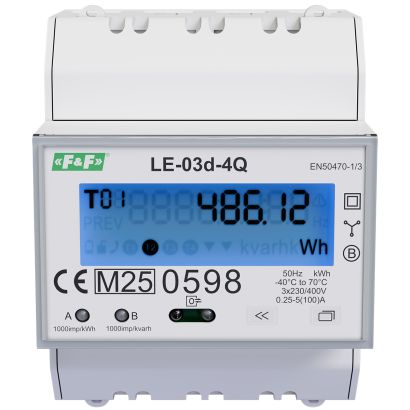
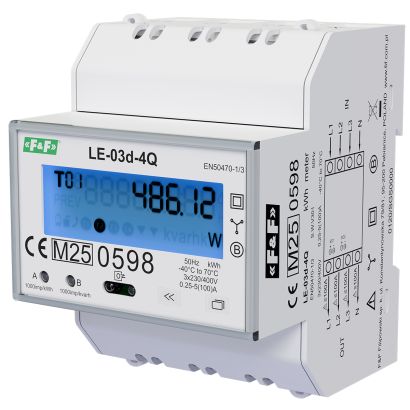
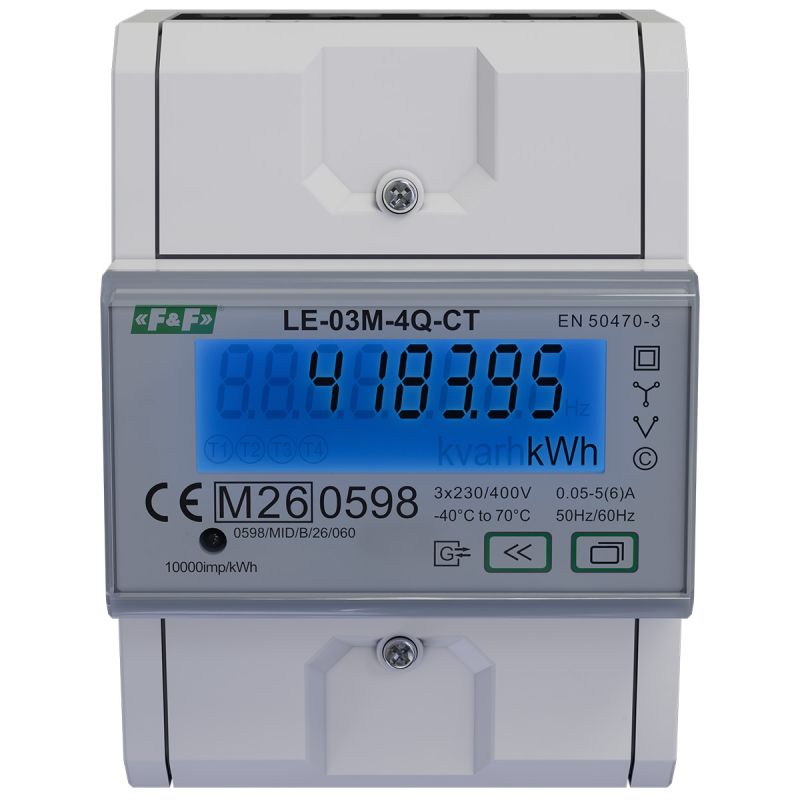
LE-03M-4Q-CT – 3-phase, semi-direct (transformers), bidirectional, 4-quadrant electricity consumption meter
MID certificate,
3-phase electricity meter,
semi-direct measurement using current transformers,
high measurement accuracy – Class C (0.5%),
bidirectional, 4-quadrant energy measurement,
measurement of inductive and capacitive reactive energy,
measurement of network parameters,
remote reading – RS385 communication interface, Modbus RTU protocol
backlit LCD display,
auxiliary energy meter with RESET function,
5-year warranty
Compliance
MID Directive 2014/32/EU
Certificate No. 0598/MID/B/26/060
The LE-03M-4Q-CT electricity meter at a glance:
The LE-03M-4Q-CT is an advanced, three-phase electricity meter, enabling semi-direct (using current transformers) bidirectional measurement of active energy (drawn from and fed into the grid) and full four-quadrant measurement of reactive energy (inductive and capacitive). High measurement accuracy (0.5%) ensures reliable and accurate billing of energy consumption.
The meter is MID-certified, making it suitable for use as a meter for billing energy consumption costs.
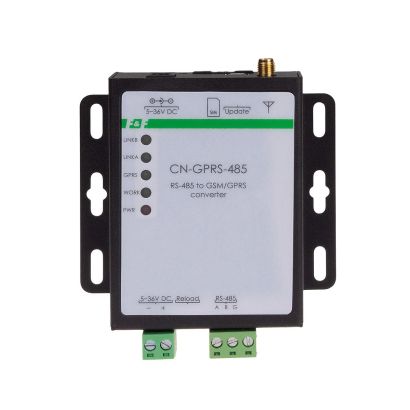
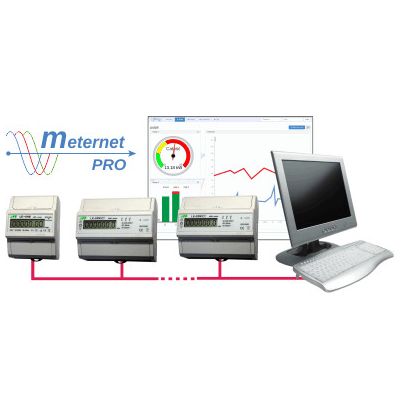
The meter is equipped with an RS485 communication port supporting the Modbus RTU protocol, enabling remote meter reading and integration with external data logging systems, such as Meternet or Fox.
In addition, the meter is fitted with a standard pulse output signalling an increase in active energy consumption.
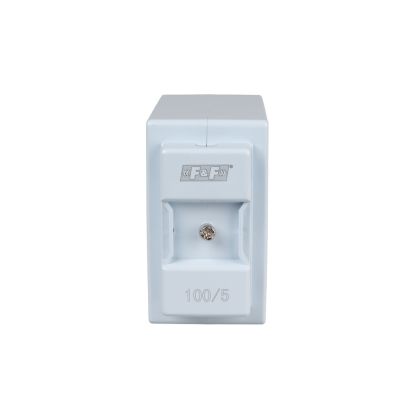
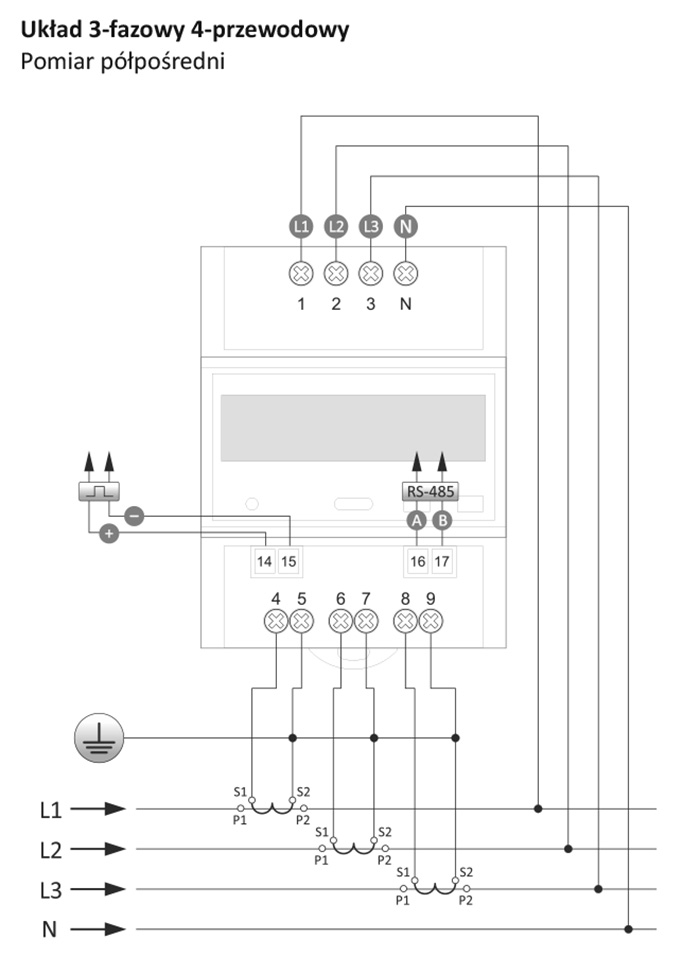
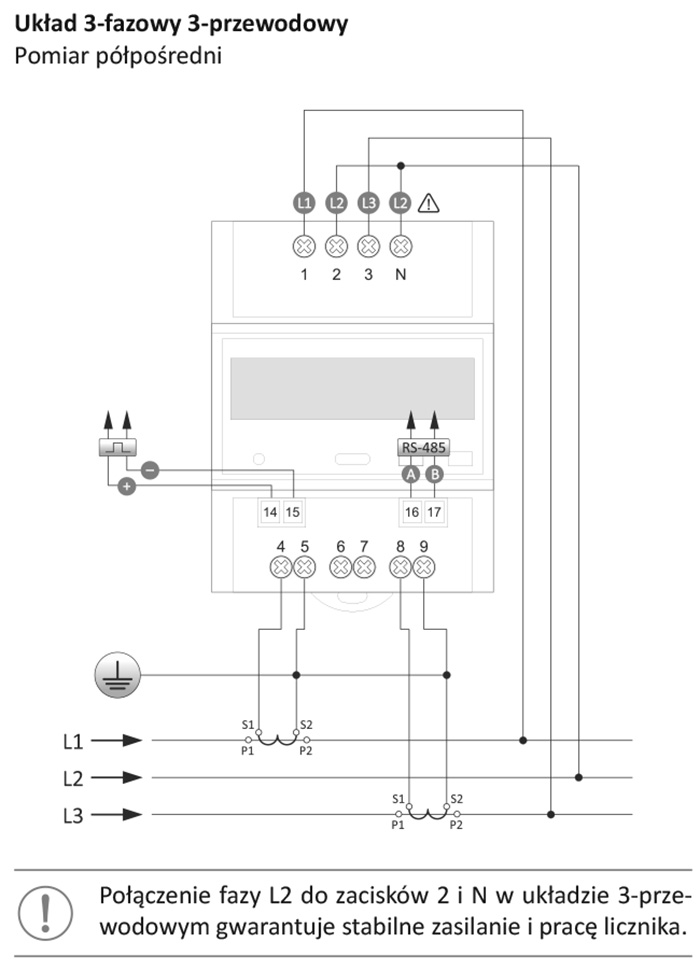
semi-direct measurement using 5A current transformers;
operation in three-phase 3- and 4-wire configurations
bidirectional active energy measurement (energy consumed and supplied),
4-quadrant reactive energymeasurement (inductive and capacitive energy),
high measurement accuracy – Class C (0.5%),
advanced measurement capabilities:
voltages, currents, power, frequency, power and current demand,
detailed information on energy consumption and network parameters – including a breakdown by individual phases,
RS-485 communication with Modbus RTU protocol support,
pulse output for signalling increases in active energy consumption,
additional auxiliary meter with REST function,
PIN code protection for settings,
backlit, multifunctional LCD display,
MID certification,
DIN rail mounting,
5-year warranty.
measurement system: three-phase, 3- and 4-wire,
rated voltage: 3 × 230/400 V AC,
measurement type: semi-direct (using current transformers),
suitable for connection to standard 5 A current transformers with a maximum ratio of 1000:10
bidirectional active energy measurement (energy consumed and supplied),
4-quadrant reactive energy measurement (inductive and capacitive energy),
communication: RS-485;
protocol: Modbus RTU;
active energy measurement accuracy: Class C;
compliance: MID;
pulse output: 1 × SO;
mounting: DIN rail;
enclosure width: 4 modules, 71.5 mm.
The LE-03M-4Q-CT separately records energy drawn from the grid and energy fed into the grid. Bidirectional measurement covers both active and reactive energy.
This allows the meter to be used in installations where the direction of energy flow may vary, including systems integrated with a photovoltaic installation or energy storage system. The device can also function as a sub-meter for a separate part of an installation, premises, circuit or three-phase consumer.
The meter records inductive and capacitive reactive energy, taking into account the direction of its flow. The values are recorded in four quadrants, Q1–Q4.
This measurement range complements the information on active energy consumed and supplied, and provides a more comprehensive picture of energy flows within the installation. The LE-03M-4Q-CT also measures reactive power, apparent power and power factor.
The device is designed for measurement and data logging. It does not provide reactive power compensation and does not replace a controller or actuator intended for such compensation.
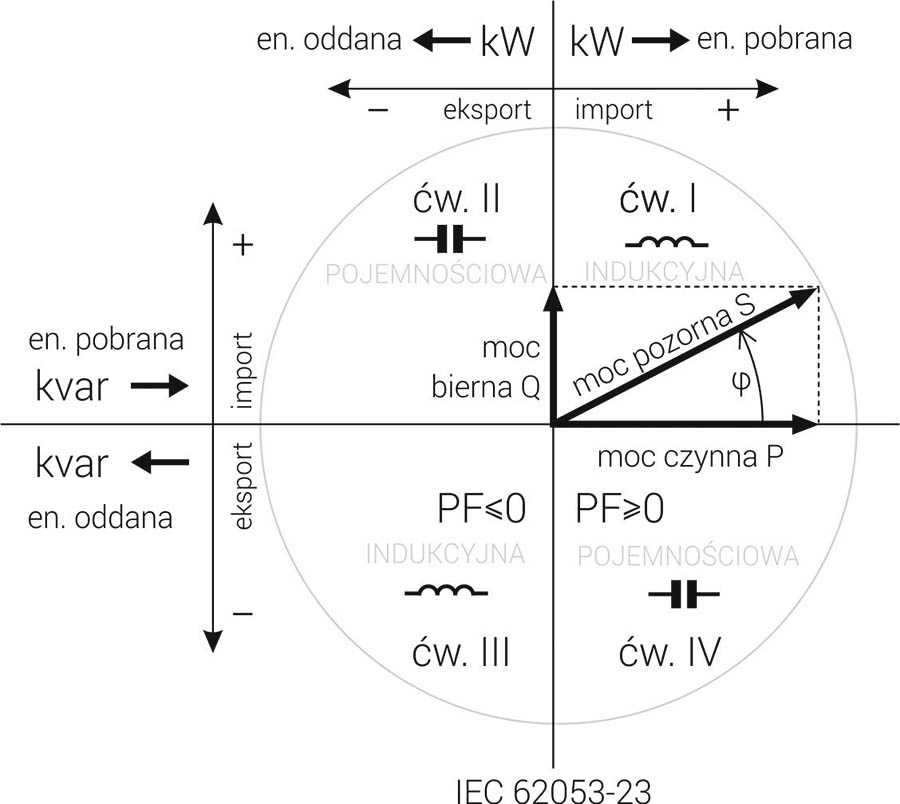
In addition to active and reactive energy, the meter measures phase and phase-to-phase voltages, currents in individual phases, frequency, active, reactive and apparent power, and the power factor.
The LE-03M-4Q-CT also calculates active and reactive power demand, including separately for each phase. Data can be read locally on the LCD display or digitally via Modbus RTU.
The RS-485 port enables the meter to be connected to a compatible communication bus. The Modbus RTU protocol allows the master system to read energy registers and current network parameters.
The LE-03M-4Q can therefore operate as a sub-meter with remote reading in compatible monitoring, data logging, automation, BMS or SCADA systems. Integration requires support for the Modbus RTU protocol and the device’s register map.
The device features an additional auxiliary counter with a REST function. This allows a separate measurement to be started from a selected point in time without altering the main energy registers.
The SO pulse output (open-collector type) can be used with devices equipped with inputs designed for pulse counting.
The LE-03M-4Q-CT holds MID certification confirming compliance with the requirements for measuring instruments. As a result, it can function as a sub-meter in systems where the use of an MID-compliant device is required, including for the billing of energy consumption.
Measured values:
|
Active energy consumed/supplied |
AE+/AE- |
[kWh] |
|
Reactive energy consumed/supplied |
RE+/RE- |
[kVArh] |
|
Reactive energy broken down into 4 quadrants |
Q1–Q4 |
[kVArh] |
|
Phase voltages |
U1, U2, U3 |
[V] |
|
Phase-to-phase voltages |
U12, U23, U31 |
[V] |
|
Phase currents |
I1, I2, I3 |
[A] |
|
Frequency |
F |
[Hz] |
|
Active power |
P |
[W] |
|
Reactive power |
Q |
[var] |
|
Apparent power |
S |
[VA] |
|
Power factor |
cosϕ |
LE-03M-4Q-CT – 3-phase, semi-direct (transformers), bidirectional, 4-quadrant electricity consumption meter